
Protecting What Matters: CCTV & Camera Systems for Farms and Acreages in Alberta
Security isn’t just for the city. As rural crime increases across Alberta, protecting your property—whether it’s a working farm or a hobby acreage—has never been more important. CCTV and surveillance systems are now affordable, flexible, and smart enough for any size of rural setup.
What Are You Trying to Protect?
Rural Alberta farms face higher property crime risks than urban areas. Statistics Canada reports that rural Alberta had 769 break-ins per 100,000 people in 2021 — nearly five times the lowest provincial rate — and a 53% higher break-in rate than Alberta’s cities. A recent StatCan report similarly noted that prairie rural crime rates can be 50% or more above urban ones. This elevated risk means farmyards, equipment sheds, barns, and livestock are common targets. For example, Alberta RCMP recently seized around $150,000 in stolen farm machinery (ATVs, tractors, tillage equipment) from a rural property.
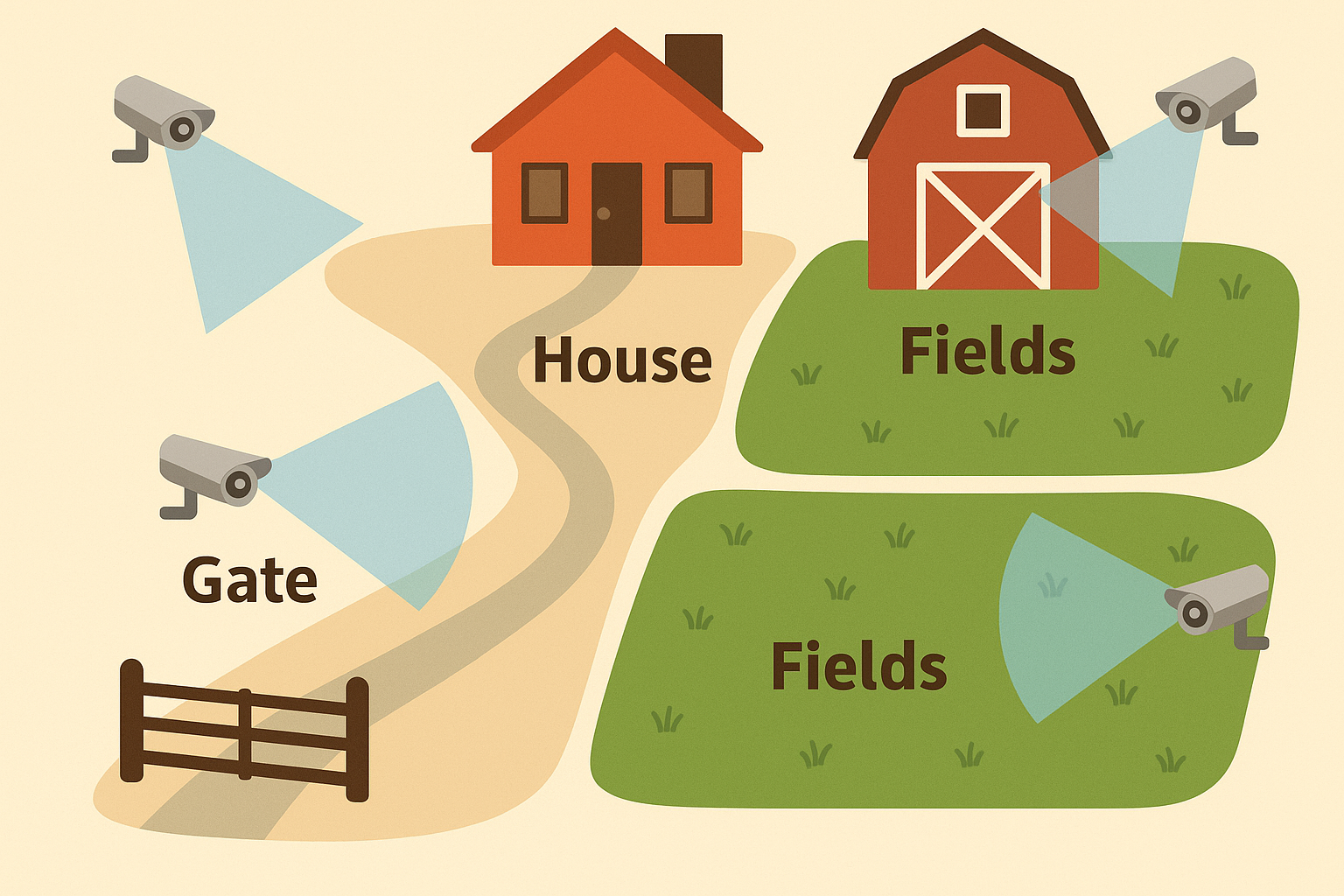
Begin by listing all the high-value assets and access points on your acreage: machinery, fuel tanks, the barn interior or entrances, sheds, grain bins, livestock barns, well pumps, or even solar equipment. Decide which perimeters and building corners you want covered. For example, you might place one camera to watch the driveway gate, another to cover a machine shed door, and another facing a calf barn. Don’t forget “dark spots” or outbuildings behind trees. In practice, farmers often note break-ins in storage barns or equipment yards when parked out of sight.
At the same time, respect privacy and legal limits. While you may record your property 24/7, the Criminal Code of Canada forbids secret audio recording or filming of private spaces. Canadian guidelines advise not to point cameras at areas where people “have a reasonable expectation of privacy” (like neighbors’ windows or private yards). In Alberta, personal video of identifiable people is governed by PIPA (Personal Information Protection Act). A common practice is to post a simple sign at gates informing visitors that surveillance is in use.
Local Storage or Remote Viewing?
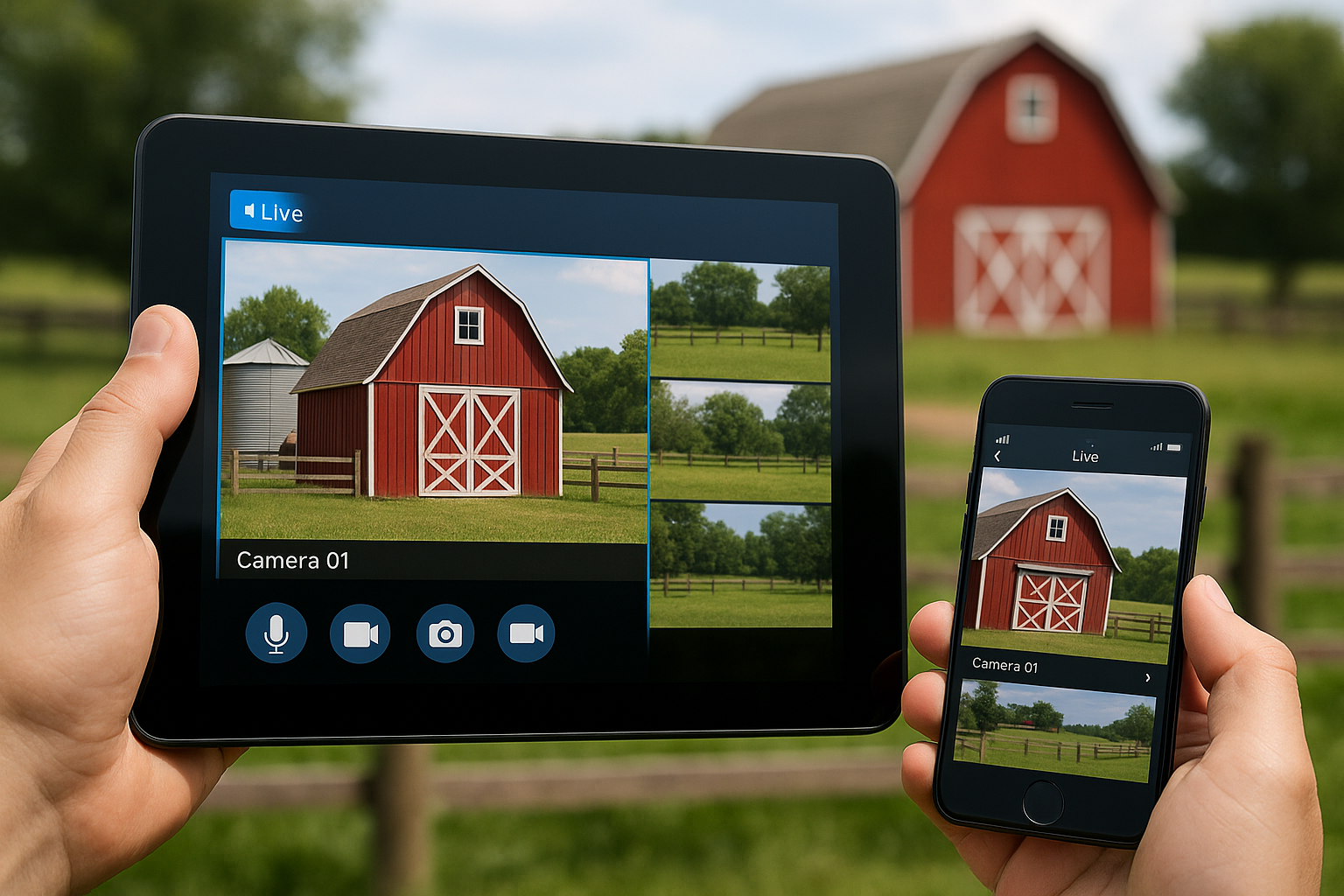
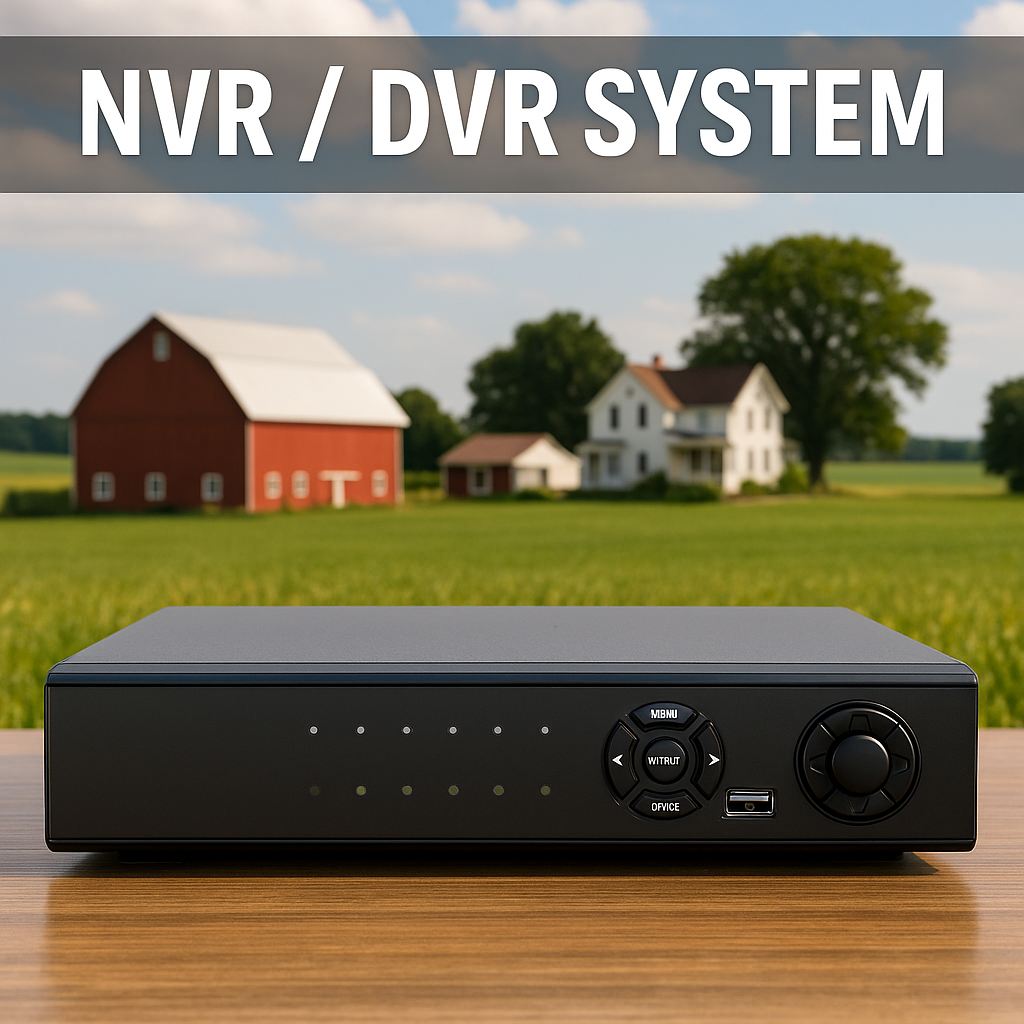
A key early decision is where your footage will be stored and viewed. Traditional DVR/NVR systems keep video files on a local hard drive (typically inside a house, shop, or locked cabinet on the farm). These systems work even if the internet is slow or disconnected and can be configured for 24/7 recording or motion-triggered clips. The benefit is reliability and more control over footage. Be sure to use a small UPS (battery backup) to protect against outages.
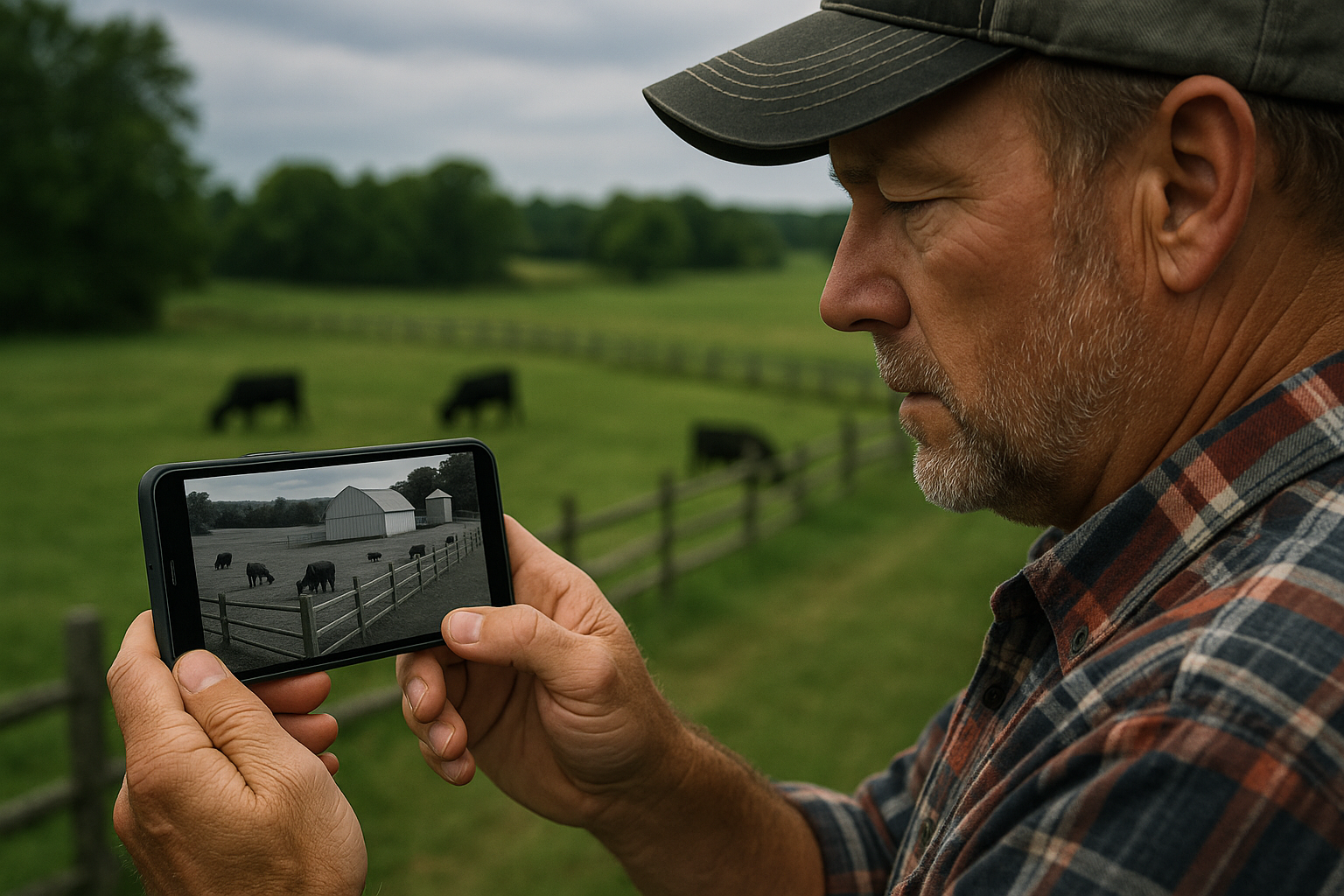
Remote viewing or cloud storage offers convenience. Many IP cameras support microSD cards or uploading to cloud servers. This allows live feed monitoring, motion alerts, and remote viewing on your phone—ideal for acreage owners who travel or are away seasonally.
But bandwidth matters. One 1080p camera recording 24/7 may generate up to 10–12 GB/day. Multiply that by four cameras, and you’re looking at 300–400 GB per month. Consider a hybrid approach: use local NVR storage for most cameras, and configure only key cameras (like gates or livestock pens) to stream to the cloud. If your internet is limited, you can also lower frame rates or use compression (like H.265) to reduce data usage. Always secure your network with strong passwords and firmware updates.
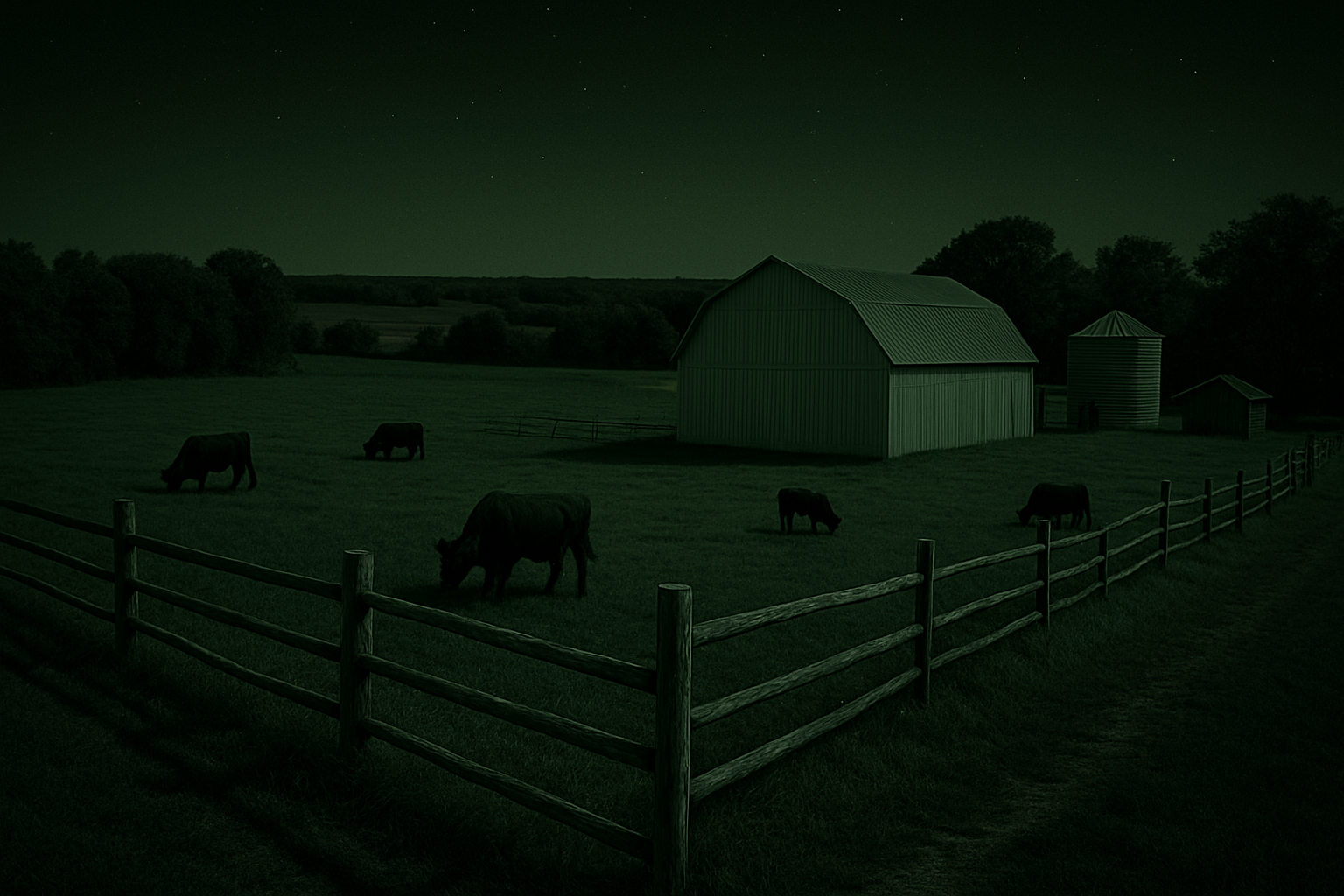
Low-Light, Weather, and Wireless Challenges
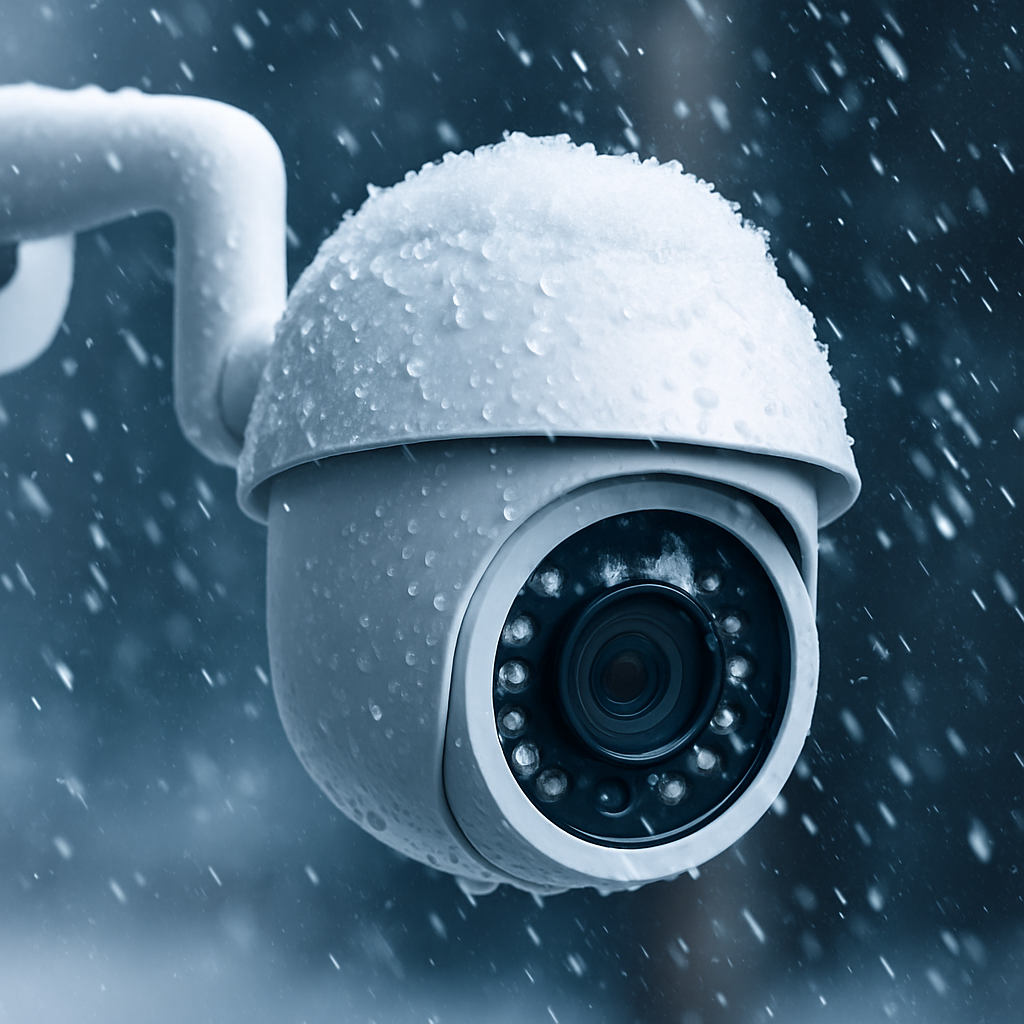
Farm cameras must endure harsh conditions. Choose weatherproof units with at least an IP66 rating and an operating range down to –30°C. For night vision, opt for IR-enabled cameras with visibility up to 30–50 meters. Some premium units offer “starlight” color imaging in low light, but come at a higher cost.
Wireless connectivity can be challenging on large properties. Standard Wi-Fi usually covers only 50–100m outdoors. Use PoE (Power over Ethernet) for longer and more reliable connections, or consider fiber or wireless bridges for very distant structures. Solar or battery-powered cameras are good for remote spots—but expect limited performance or shorter battery life if streaming continuously.
- Mount cameras high: 3–5 meters helps avoid tampering and vandalism.
- Use armored cables: Especially important around livestock or machinery.
- Clean camera lenses: Snow, bugs, and webs can degrade image quality fast.
Legal Considerations for Alberta Property Owners
Installing CCTV cameras on your property is legal in Alberta, but there are important caveats:
- No Surveillance of Public Spaces: Don’t aim cameras at roads or neighbor yards without masking or justification.
- Audio Recording: Strongly discouraged unless proper signage is in place and consent is given.
- Signage: Always post visible signs that indicate surveillance is in operation.
The Office of the Information and Privacy Commissioner of Alberta provides further details on what constitutes reasonable and lawful camera use. For farms with employees, be aware of additional obligations under workplace privacy legislation.
Power, Connectivity & Redundancy
Rural environments bring power and internet reliability issues. To ensure continuity of your CCTV system:
- Use a battery backup (UPS): Prevents system shutdown during brief power outages.
- Consider Starlink or LTE failover: Ensures your remote feeds stay online even if wired internet goes down.
- Use a 2TB+ NVR hard drive: Enough for multiple 1080p cameras storing 30 days of footage. Cloud backup is also a good secondary layer.
It’s also wise to install surge protectors and plan for seasonal outages. In summer, lightning strikes can damage exposed gear; in winter, batteries and cameras need cold-rated components. Professional installers often include these safeguards automatically.
Professional Installation vs. DIY
DIY kits are more accessible than ever, but professional installation is still recommended if you want full peace of mind. Experts can:
- Position cameras for maximum field of view and zero blind spots
- Route weatherproof wiring through conduits
- Configure remote access apps, alerts, and backups properly
Cadenza Technology & Telecommunications proudly serves farms, acreages, and ranches throughout rural Alberta. From consultation and layout planning to full system install and ongoing support—we’ve got your back. No call centres, no guesswork, just local service you can trust.
Final Thoughts
Whether you’re running a commercial ranch or enjoying the quiet of a hobby acreage, your security matters. A thoughtfully designed CCTV system is more than a deterrent—it’s peace of mind.
Ready to Secure Your Property?
Let us walk your land (virtually or in person) and help you plan the best system for your needs. We serve clients across Lac Ste. Anne County, Parkland County, and beyond.
Request a Consultation
Leave a Comment
Comments
No comments yet. Be the first to comment!